For decades, incorporation has been one of those topics that periodically returns to the conversation in McKinleyville. It comes up, it quiets down, and then it comes up again, usually when people begin asking bigger questions about how our community is organized and how local decisions get made.
As the Chamber, we’re not arguing for or against incorporation. Our role is to help residents, businesses, property owners, and community partners understand the terms being used, the process being discussed, and where to find factual information.
Over the past several months, we’ve heard many questions from business owners and residents about incorporation. This article is intended to answer some of the most common ones using publicly available information.
What “Incorporation” Actually Means
McKinleyville is currently an unincorporated community within Humboldt County. That means we’re not a city, and many local government functions such as planning, parks & rec, law enforcement, and roads to name a few are handled by the County or by special districts like McKinleyville Community Services District (MCSD).
Incorporation would mean forming a city government with a city council and taking on certain local responsibilities. It would not remove McKinleyville from Humboldt County. Cities still exist within counties; they simply manage more of their own local governance.
And importantly: incorporation doesn’t happen just because people talk about it. It’s a formal, multi‑step process that includes study, public review, and, if it ever gets that far, a vote of the people who live here.
Why the Topic Is Coming Up
McKinleyville has a lot going on. We’re a community full of active businesses, passionate nonprofits, busy parks and trails, strong neighborhoods, and people who care deeply about where we’re headed.
With all of that, questions naturally arise about local decision‑making, long‑term planning, financial feasibility, and how McKinleyville wants to shape its future.
Talking about incorporation doesn’t mean McKinleyville is becoming a city. It means people are exploring whether incorporation is feasible, what the process would involve, and what it could mean for the community if it ever moved forward.
What’s Being Explored Right Now
When people talk about incorporation, they’re really talking about a whole bundle of questions:
- City boundaries
- Which services a city might take on
- What stays with the County or special districts
- Financial feasibility
- Revenue sources
- Costs and responsibilities
- How governance would work
These aren’t questions you can answer with assumptions or social media threads. They require real study.
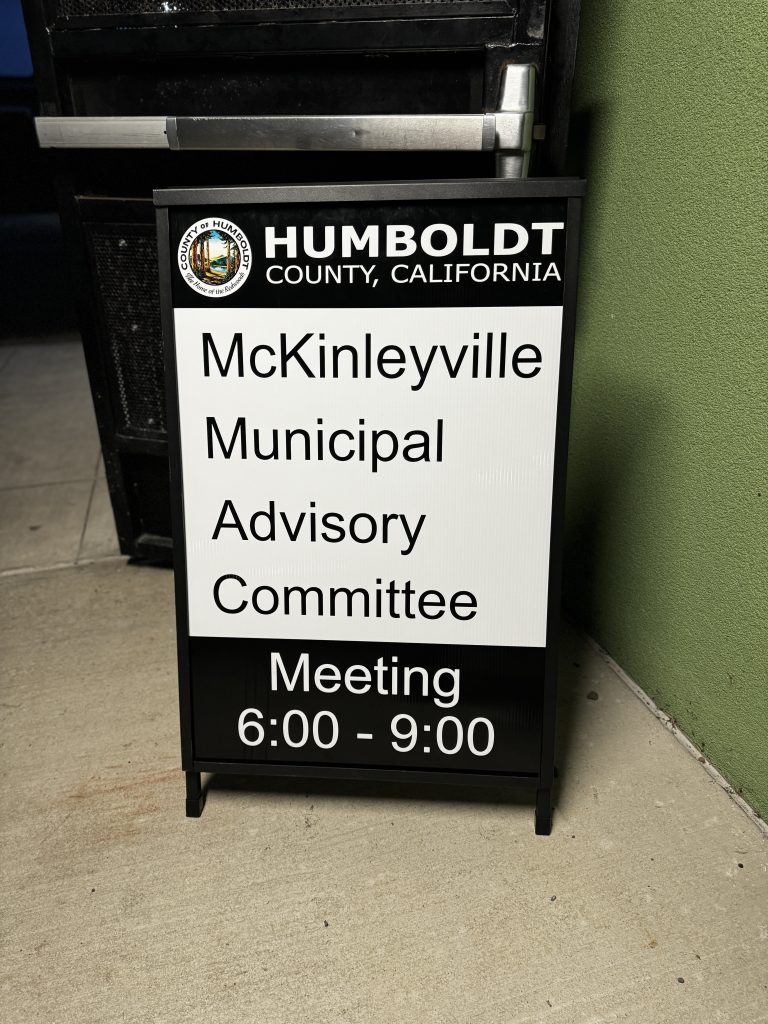
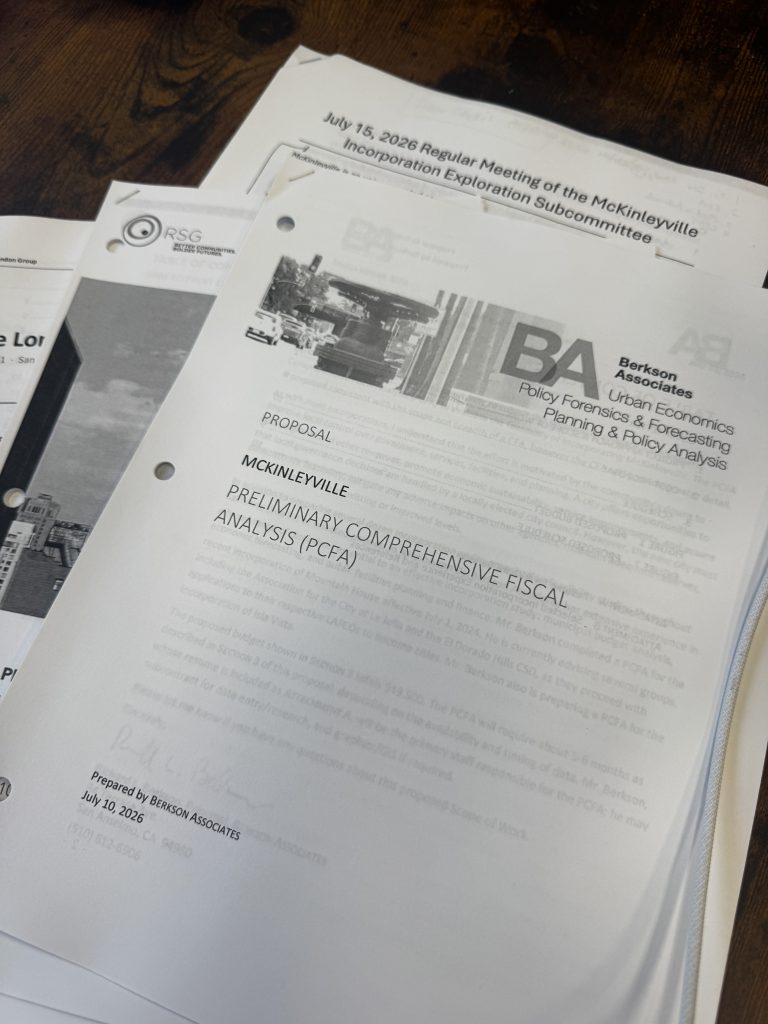
Locally, the McKinleyville Municipal Advisory Committee (MMAC) and its McKinleyville Incorporation Exploration Subcommittee (MIESC) have been gathering information and asking those early questions. Their role isn’t to promote incorporation; it’s to understand it.
What an Initial Feasibility Analysis Is
You may hear the term “Initial Feasibility Analysis” (IFA). You can think of it as an early reality check. It’s not a decision. It’s not a campaign. It’s simply an early study asking: Is incorporation even plausible enough to keep researching?
This is where we are right now.
The Initial Feasibility Analysis is expected to begin in Fall 2026. It will look at current services, potential city responsibilities, revenue sources, costs, and the major questions that still need answers. If incorporation ever moved forward, this kind of analysis would be required.
Who Actually Decides
If McKinleyville ever pursued incorporation formally, the process would go through the Local Agency Formation Commission (LAFCo). They review changes to local government boundaries.
If LAFCo approved moving forward, the final decision would go to McKinleyville voters. Not the Chamber. Not MMAC. Not the County. The people who live here.
What Incorporation Would Not Automatically Do
It’s equally important to understand what incorporation doesn’t guarantee:
- It doesn’t solve every local issue.
- It doesn’t create unlimited funding.
- It doesn’t change every service overnight.
- It doesn’t remove McKinleyville from Humboldt County.
- It doesn’t happen without formal review and voter approval.
Major governance changes come with tradeoffs, responsibilities, and costs. That’s why factual information matters.
Why This Matters for Businesses
Local businesses care about things like permitting, roads, signage, economic development, visitor services, and how McKinleyville presents itself. Incorporation could affect some of those areas, or not, depending on what a future city might take on.
Businesses don’t need to take a position right now. But they do deserve clear information.
Supporting that clarity is part of the Chamber’s job.
Why This Matters for Residents
Residents have their own questions: representation, services, costs, identity, priorities. Some people are curious. Some are skeptical. Some are hopeful. All of those reactions make sense.
The best place to start is shared information: what incorporation means, what’s known, and what still needs study.
What This Post Is (and Isn’t)
This is not an argument for incorporation. This is not an argument against incorporation. This is not a fiscal analysis or legal advice.
It’s simply a starting point for understanding the conversation.
Frequently Asked Questions
Is McKinleyville becoming a city?
Not at this time. Incorporation is currently being explored through an information-gathering process. No decision has been made.
Will residents vote?
If incorporation ever moved through the required studies and approvals, voters in the proposed incorporation area would ultimately decide whether to incorporate.
Is the Chamber taking a position?
No. At this time the Chamber’s goal is to provide factual information and help businesses and residents understand the process.
How to Stay Informed
If you want to follow the topic:
- MIESC & MMAC Information on Humboldt County Website
- Chamber Webpage on Incorporation Exploration Information
As this conversation continues, the Chamber will keep sharing factual, neutral information for residents and businesses.
McKinleyville’s future is worth paying attention to. Staying informed, and asking good questions, is the best way to participate in whatever comes next.
Regardless of where someone ultimately lands on the topic, informed conversations are almost always more productive than assumptions. Our hope is that this article helps make those conversations a little easier by providing a common starting point built on facts.